Welcome to my Website

It seems today learners and educators have been catapulted into a virtual world due to the pandemic.  Even though learning in the 21st century can present challenges we still need to rely on the fundamental basic tenets of teaching, writing, learning, and researching.  

Dr. Carol-Ann Lane, a professor, researcher and writer with considerable experience in K-12 and university, researches and writes about philosophy, cognitive behavior and literacy.  Her approach is based on valuing voices and challenging the status quo. 

Educators and students alike have had to re-imagine ways of teaching and learning.  In order to do this we still draw on our own instincts to improve ourselves. 

If you have the time I invite you to follow me, take a virtual walk through my web pages and see if my words and ideas help you.  If you want to learn more from me send me a note along with your email on the Contact Me page.

Teachers' Corner

The teaching profession is noble.  Remember you are valued.  Being a teacher is worth it even if you can make a difference for one child's education and life. Teaching can be a deeply fulfilling career. 

You have graduated from the Bachelor of Education or Masters of Teaching program and no longer a teacher candidate. You have now been hired by a school board and either supply teaching or you finally have your own classroom. This is a wonderful transition.

Even if you are on a supply list don't be disheartened.  You still have the opportunity to exercise your teaching strategies and classroom management techniques. 

Being a teacher is not a walk in the park.  I have had  many years of teaching students at all levels from JK-12, from academic to special needs, including teaching teachers.

Time is involved in managing the classroom, understanding the curriculum, creating lesson plans that motivate students but also meet the needs of all learners.  Learners are all unique and at different levels, some have special needs. What about lessons that integrate indigenous themes, anti-racism, and literacy across the curriculum? 

How do you make your classroom an inclusive environment? 

My approach with my students has always been to create an open inclusive setting. Building a spirit of community based on indigenous inspired teaching method such as Tribes.  

Tribes represent small peer groups who support each other, learn from each other and care about each other.  Teaching students to think and listen actively.   No put downs. Respect. Active listening. Right to pass.  

How to foster an inquiry-based culture for Primary learners

Requires knowledge building – collaboration

Links to indigenous talking circle

Builds student voice, interest and curiosity

Need to introduce authentic problems to discover

Inquiry based learning grounded in natural instincts of primary learners

Can use art to draw and express ideas for early learners

Classroom should reflect flexible, collaborative seating in clusters


If you want to learn how to integrate indigenous themes across the curriculum, teaching methods to support students with exceptionalities then send me a query by filling out the Contact Me form.  I don't have all the answers but willing to provide guidance and support.

Posts


BIO

Carol-Ann is a researcher, educator, and author.  She graduated with a Doctor of Philosophy, specializing in cognitive behavior and applied linguistics.  Her PhD thesis has a cross-disciplinary focus including science/innovative technology, narrative multiliteracies, gender theory, and social behavioral sciences. She is a social scientist, and an ethnographer.  

During 2013-2015, with other doctors she was invited to conduct a Canadian study about the moral ethics of biotechnology among elementary and secondary pre-service teachers in conjunction with a university in Spain.  Within the social sciences discipline, her master thesis was a mixed methods study focused on cognitive behavior of adults learning in a higher education online environment.

Carol-Ann is a former elementary and secondary teacher with a GTA school board (over 7 years) who has worked in inclusive and special education settings.  Her teaching experience expands over 4 years in university settings both undergrad and post-graduate level courses.

She has attended numerous conferences worldwide over the last 8 years to mobilize her research.  Based on this she has been invited to edit a book (see my book page) and is currently co-authoring a number of articles with other doctors.  She has been the sole author for numerous chapters in global university based research handbooks and peer-reviewed scholar articles.  She is currently working on a series of creative fiction and nonfiction literary works.

Community Service roles

Over the past few years Carol-Ann's faculty roles included research committee member for planning, developing and implementing the online Professional doctorate degree program; Doctoral seminar chair leading early PhD students; regular lead technology committee member for annual symposium; a panel guest for Thames Valley school board and committee member on various research groups including Online Teaching and Learning Group (TLT), often collaborating on the role of technology in improving online pedagogy for higher education.

Writers' Room

Graduate studies: How to manage and keep your sanity

Congratulations you've been accepted to university studies, an undergrad, a masters or maybe a PhD.  What next? Will my professors be kind, helpful, supportive? I'm not sure and I hope they are for your sake. So why am I writing this blog? I am writing this for you. To help you in case you need some guidance.

You're in attendance for your first class.  The professor has handed out your syllabus either in person or virtually.  You scan it, read a few sections. 

Course description, expectations...yes got that...ok...

Evaluation, participation, reflections..yes...not bad..

research paper...you stop and look again..

"What! no...no," you think to yourself. "Where do I start? How many articles do I need?"

Are you wondering if you should drop this class? We never did research papers on own in high school!

Does this sound like you? If it does then read on.

If you're just starting university it is different from high school.  In high school your assignments, usually essays more importantly thesis statements have been defined for you. Basically, limiting you to a defined set of topics based on what you've read or learned in class. 

For university studies you are expected to think and learn independently.  You are expected to define your own thesis statement, write clearly, and justify your claims with evidence.

Here are a couple of tips I'd like to share with undergrads:

1) Take a step back, take a deep breath, and above all don't panic.

2) Ask questions.

3) Focus on your topic

4) Organize your thoughts

If you want to learn more. Please email me. 

Pursuing the ultimate: A PhD

Of course some of you may be thinking the above section doesn't apply to me because I'm in post-graduate studies, such as a master's degree or PhD. Well that's ok I have some tips for you also. 

Researching is your lifeline. It will define you. You will eat, sleep, and dream research.  You'll have to learn to mine the research landscape. It will not be easy.  

Pursing a PhD is one of the most difficult and challenging educational degrees to conquer.  Doctoral candidates are required to become experts in their chosen field of knowledge.  They must gain expertise in research methodologies (quantitative, qualitative) in a lab, in the library and in the field.  This is their passion, their life.

They must pass comprehensive exams that test the extent of their knowledge. There is only a pass or failure for this exam, the reason is to "weed" out the candidates.  Not everyone moves ahead.  Only candidates who pass are allowed to move forward to conduct their fieldwork and write their dissertation.  The dissertation must be original research and generally for humanities and social science the dissertation is book length.

Once they write, they revise, revise, and revise, they finally have the opportunity to give a public lecture for their dissertation and undergo a formal PhD oral defense exam by a committee of experts and scholars. Again one chance only. 

In short, those individuals who achieve a PhD must excel beyond being an excellent student.  They must be people who can absorb an enormous amount of knowledge, pass exams, observe, analyze, research, conduct studies, write papers, research, publish, publish, and publish!

My Tips for post-grads:

1) Find a supervisor you can trust.

2) If you have a great supervisor - then you can leave this page.

3) Supervisors are not made equal.  Some will ramble on about themselves, for hours, hours, and hours.  At every meeting you have and at the end you may get five minutes to discuss your problem.  If this sounds familiar then stay on this page

4) Ask questions.

5) Do some major soul searching to find your passion.

6) Your research must be original

In short, navigating the path of post-graduate studies is like being a farmer.  First you have a broad landscape where you have to determine which crop is the best to grow.  Then you have to find the seeds to plant.  That's the first tough part. The seeds need to be cultivated by tending to them constantly - nurturing them, watering them, rotating them, ensuring there is enough sun and that no weeds infest the crop.  It requires planning, organizing, re-planning, writing, re-writing, thinking, and re-thinking.

Want to learn about determining your research topic, mining the landscape, finding sources, any more? Follow me and Find my contact page and Email me.

Books

Current/Future publications

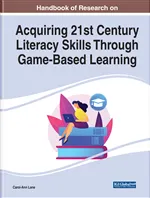
Handbook of Research on Acquiring 21st Century Literacy Skills Through Game-Based Learning  (2 volumes)  

                    Handbook of Research on Acquiring 21st Century Literacy Skills Through Game-Based Learning

Carol-Ann Lane Copyright: © 2022

Please visit my Publisher's webpage for further information about my upcoming book: 

Handbook of Research on Acquiring 21st Century Literacy Skills Through Game-Based Learning
Carol-Ann Lane (University of Toronto, Canada)
ISBN13: 9781799872719|ISBN13 Softcover: 9781799872726|EISBN13: 9781799872733
https://www.igi-global.com/book/handbook-research-acquiring-21st-century/262213

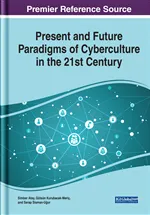
Present and Future Paradigms of Cyber-culture in the 21st Century 

Carol-Ann Lane Copyright: © 2021

                    Present and Future Paradigms of Cyberculture in the 21st Century

Current/publications

Collaborating with Educators: Video Games Support Alternative Classroom Pedagogies to Support Boys' Meaning-Making 

Carol-Ann Lane Copyright: © 2019 |Pages: 26 Ch009-Hardcover 978-1-64113-671-6; eBook 978-1-64113-672-3 

InfoAge Worldwide Publishers

Integrating Digital Technology in Education School-University-Community Collaboration

Edited by:
R. Martin Reardon, East Carolina University
Jack Leonard, University of Massachusetts, Boston

A volume in the series: Current Perspectives on School/University/Community Research. Editor(s): R. Martin Reardon, East Carolina University. Jack Leonard, University of Massachusetts, Boston.

Digitizing Learning: How Video Games Can Be Used as Alternative Pathways to Learning


Innovative Trends in Flipped Teaching and Adaptive Learning

Carol-Ann Lane Copyright: © 2019 |Pages: 24 DOI: 10.4018/978-1-5225-8142-0.ch007

Please visit my Publisher's webpage for further information about my past publications:

IGI Global Publishers

Multiliteracies meaning-making: How four boys' video gaming experiences influence their cultural knowledge-Two ethnographic cases

Carol-Ann Lane Copyright: © 2018

Please visit my Google scholar for more information 

GoogleScholar  


"Play, Score, Engage": Finding Ways for Boys to Make the Grade!

Carol-Ann Lane Copyright: © 2016
Literacy Information and Computer Education Journal, 7(4), 2461-2467

Please visit my Google scholar for more information 

GoogleScholar

Biotechnology literacy: Assessing the knowledge and attitudes of student teachers

In modern society, science and technology have become key fields affecting the daily lives of all citizens. Furthermore, young people will need this new knowledge in their future careers and in their daily lives as members of a technologically-imbued society. Developing (click on link below for more information)

J Barnett PhD, CA Lane - 2013  Copyright: © 2013

WCSE-UWO

Using Video Technology to Address Boys’ Literacy Gap and Connect the Male Voice in Gender Dynamics

Carol-Ann Lane Copyright: © 2013 |Pages: 1

International Journal of Technology and Inclusive Education (IJTIE) , Volume 2, Issue 1, June 2013

Social presence impacting cognitive learning of adults in distanced education (DE)

Carol-Ann Lane Copyright: © 2011 |Pages: 203  

Please visit my Google scholar for more information 

GoogleScholar

Blog away ideas in cybertown- Unit plan ideas

 English 4U Unit Plan-Hamlet/Slaughterhouse Five

Introduction

This unit plan is designed for students in the ENG4U class whereby the content and context of material has been chunked for effective comprehension of universal themes. This unit plan incorporates both Hamlet (play by Shakespeare) and Slaughterhouse Five (novel by Kurt Vonnegut).  The objective of the unit plan is to address specific topics (see Appendices) extracted from the Grade 12 English course in the Ontario curriculum.  The topic focuses on overall expectations:

·     The course emphasizes the consolidation of the literacy, communication and creative thinking skills necessary for success in an academic and daily life.  Students will analyze a range of challenging literacy texts from various periods, countries and cultures; interpret and evaluate informational and graphic texts; and create oral, written and media texts in a variety of form.

 Goals of the Unit

        The goal is for students to share thoughts and reflections relating to the protagonist, conflict and opportunities to analyze meanings based on their personal perspective and as discussed in literary circles with peers.  Students will be expected to reflect on how they would address current social issues, such as coping with grief, trauma (post war syndrome), failure and bullying.   The unit incorporates a variety of media literacy to bridge the textual gap using film, audio, blogs and Twitter.  Also the classroom will be set up as a literary community of sharing through think/pair/share, character committees and actors/directors in plays.  These methods encourage and engage learners to become aware of various perspectives and creative discovery of ideas.  The unit will integrate visuals with the use of movies and pictures to engage and motivate students with combined text and graphics for stimulation.  Students will be given choice for projects such as role play or written assignments. Students will be able to collaborate to exchange ideas and methods to gain a broader perspective.

The teacher will provide less emphasis/guidance on interpretation to allow students the freedom to express creatively role playing and being actively involved in interpretation of the texts.  Students will be given opportunities to explore critical ideas and develop language skills of Shakespeare by engaging in role playing for major characters (Hamlet, Ophelia, King Hamlet ghost, Claudius, Gertrude, Laertes and Polonius).

The pedagogical method for the in-class reading activities will incorporate round robin reading and think/aloud.  The round robin strategy allows the students to experience the reading of the play from their peers rather than the teacher reading it to them.  For each scene read in class, a think/aloud strategy will be employed whereby the teacher will stop the readers when it is deemed appropriate to draw the students’ attention to compelling ideas, themes, major plot events or character developments. The classroom environment will be structured as “safe and collaborative” to convey flexibility and openness. Students will also be able to call out for further clarification on tone, use of language and vocabulary used to gain a deeper understanding of the plot and characters.

It is important to create a learning environment of student choice, giving them several alternatives in assignments and participation.  Students control the environment as it transitions from teacher-centered to student-centered.  Options also include incorporating into lesson plans multi-literacy conventions such as Blogs, twitter, video/film, media and role playing.

If you want to learn more or have access to various lessons within the full unit plan calendar for both Hamlet and Slaughterhouse Five, please  follow me (especially for updates) and click the Contact Me page to Email me for more information.